Looking for a Charlotte neighborhood where you can grab coffee, meet friends for dinner, hop on the light rail, and come home to a condo or townhome without spending your whole day in the car? South End keeps coming up for a reason. If you are considering urban living in Charlotte, this guide will help you understand what South End in 28203 actually feels like, what kinds of homes you will find, and why so many buyers are drawn to its walkable, transit-oriented lifestyle. Let’s dive in.
Why South End Stands Out
South End sits just south of Uptown and has grown into one of Charlotte’s most recognized urban districts. According to Charlotte Center City Partners and South End CLT, the neighborhood blends historic industrial buildings with newer transit-oriented development, which helps explain its mix of character and convenience.
This is also a higher-density housing market with a strong lifestyle focus. Published South End fast facts show more than 13,100 residents, a median age of 30, a typical home value of $642,400, and more than 9,600 apartment homes. That makes South End feel less like a traditional subdivision and more like a live-work-play district.
The long-term direction of the area supports that identity. The South End Vision Plan, adopted by Charlotte City Council in 2018, was created to guide the neighborhood over 25 years toward a more vibrant, walkable, transit-oriented, and welcoming future.
Walkable Living in South End
Walkability is one of South End’s biggest draws. The neighborhood is built around a street network, retail corridor, and transit access that make it easier to handle daily routines on foot or with shorter car trips.
A major piece of that lifestyle is the LYNX Blue Line. South End is currently served by four stations: Carson, Bland, East/West, and New Bern. South End CLT also reports strong transit use, with 25,900 average daily light rail riders and 8,892,100 annual boardings.
The Rail Trail adds another layer of convenience. The City of Charlotte describes it as an 11-mile pedestrian and bicycle facility, and South End CLT says 3.5 miles of it are accessible within South End. Along the way, you can connect to restaurants, breweries, shops, public art, and 15 bicycle routes.
That said, it is best to think of South End as car-light, not fully car-free. The area still includes parking garages and surface lots, but many residents value having meaningful alternatives for commuting, dining out, and everyday errands.
Uptown Access Keeps South End Connected
One reason South End appeals to so many buyers is its close relationship to Uptown. If you work, socialize, or attend events there, South End offers a practical way to stay nearby without giving up neighborhood energy.
Transit access is expected to improve further. CATS says a new South End Station is under construction between East/West and New Bern and is planned to open in 2028. The City of Charlotte also says the Rail Trail pedestrian bridge over I-277 will create safer, more direct, car-free access between Uptown and South End.
If you are visiting the area now, keep in mind that some Rail Trail detours remained in place as of mid-2026 during construction activity. Blue Line service, however, returned to normal in May 2026.
South End Condos and Townhomes
If your home search centers on lower-maintenance living, South End deserves a close look. Public development data shows a market shaped heavily by multifamily housing, with 9,692 existing residential units and 6,362 more planned or under construction.
Condos are part of South End’s identity, not just a recent trend. South End CLT notes that condo conversions played a role in the neighborhood’s early resurgence, and The Arlington remains one of the area’s landmark condo towers.
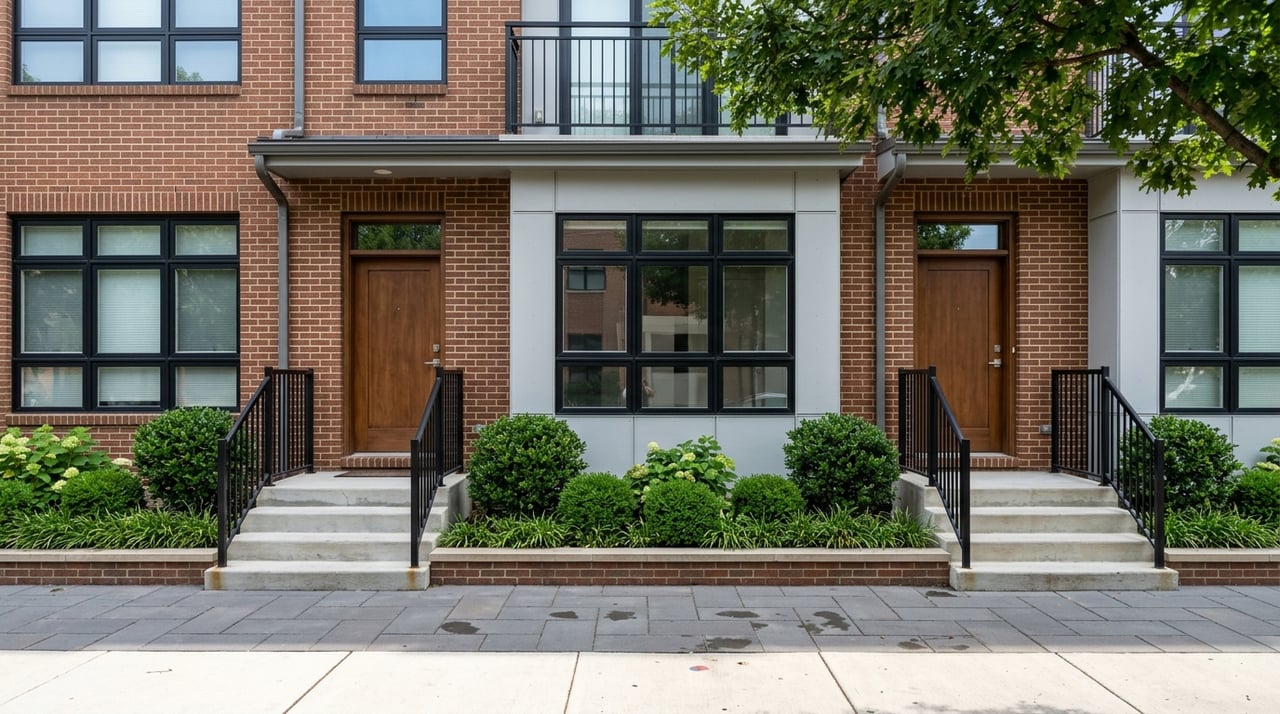
Townhomes are also part of the current housing mix. South End CLT highlights communities such as Altura South End, which includes 31 townhomes, and The Hub South End, which combines new two-story townhomes with studio, one-bedroom, two-bedroom, and three-bedroom apartments.
For many buyers, this variety is a major advantage. You may be able to choose between a condo with a more vertical, lock-and-leave lifestyle or a townhome that offers a little more separation and a different layout, while still staying close to the neighborhood’s core amenities.
What Buyers Should Expect
South End is not the place to shop for a large supply of detached homes on big lots. The neighborhood’s housing pattern leans toward compact urban living, shared amenities, and proximity to dining, transit, and activity.
That can be a strong fit if you want to spend less time on upkeep and more time enjoying your surroundings. It can also appeal if your priority is location and convenience over square footage or yard space.
Because the area continues to add housing, inventory can span older condo buildings, newer apartments, and townhome-style options. Your best fit often depends on how you balance budget, building style, commute needs, and day-to-day lifestyle preferences.
Dining and Breweries in South End
South End’s food and drink scene is one of the biggest reasons people fall in love with the area. South End CLT reports 148 restaurants, 11 craft breweries, 15 dessert shops, and 152 locally owned shops and restaurants, which gives the neighborhood an unusually dense concentration of places to explore.
Breweries get a lot of attention, and for good reason. Official South End guides name spots such as Wooden Robot, Triple C, Suffolk Punch, HopFly, Hi-Wire, Monday Night Garden Co., Trolley Barn Fermentory & Food Hall, and Distro Beer Hub.
But South End is not just a brewery district. Station-area guides also point to a wider mix of dining and dessert options, including Sabor, Leroy Fox, Indaco, Barcelona Wine Bar, PARA, Pop the Top, Two Scoops Creamery, and Jeni’s.
That range matters if you are thinking about real life, not just weekend plans. It means you are looking at a neighborhood where quick bites, sit-down dinners, sweets, coffee stops, and casual meetups are all part of the everyday rhythm.
The Lifestyle Goes Beyond Restaurants
One of the most useful things to understand about South End is that its appeal is broader than food and nightlife. South End CLT also highlights fitness studios, yoga, run clubs, gallery crawls, public art, and the South End Farmers Market as part of the local pattern.
That helps create a neighborhood experience that feels active and social without requiring a packed schedule. You can step out for a walk, meet up for class, browse local shops, or spend part of your weekend exploring the Rail Trail and nearby businesses.
For buyers who value convenience and connection, this can be a meaningful part of the decision. You are not only buying a home. You are choosing how you want your daily routine to feel.
Is South End Right for You?
South End often makes sense for buyers who want urban energy, easier access to Uptown, and a home that supports a lower-maintenance lifestyle. It can be especially appealing if you value being near transit, restaurants, trails, and neighborhood activity.
It may be less ideal if your must-have list starts with a large yard, a quieter low-density setting, or a traditional detached-home environment. South End has a distinct identity, and that is part of its strength. It tends to attract buyers who want Charlotte living to feel more connected, flexible, and experience-driven.
If you are comparing neighborhoods in Charlotte, the key is to look beyond labels and match the area to your real priorities. The right move usually comes down to how you want to live each day, not just what looks good on a listing search.
Whether you are exploring condos, townhomes, or another low-maintenance option in South End, having a local guide can make it easier to narrow your choices and move with confidence. If you want help understanding how South End fits your goals, connect with Grant Zaharis to start with Purpose and book a free consultation.
FAQs
What is South End Charlotte known for?
- South End is known for walkable urban living, LYNX Blue Line access, the Rail Trail, a large mix of restaurants and breweries, and a housing market that includes condos, townhomes, and multifamily homes.
Are there condos in South End Charlotte?
- Yes. Condos are part of South End’s housing history, and the neighborhood includes well-known condo living options along with newer residential development.
Is South End Charlotte walkable?
- South End is widely recognized for its walkability, with access to the Rail Trail, Blue Line stations, shops, dining, and other daily destinations throughout the district.
Can you live in South End without driving everywhere?
- Many residents can enjoy a car-light lifestyle in South End thanks to light rail, walking routes, and bike access, though the area is not completely car-free and still includes parking facilities.
What types of homes are common in South End Charlotte?
- South End is best known for apartments, condos, townhomes, and other compact urban housing options rather than a large supply of detached homes on large lots.
Is South End close to Uptown Charlotte?
- Yes. South End is immediately south of Uptown, and its Blue Line stations plus trail connections help make travel between the two areas more direct.